
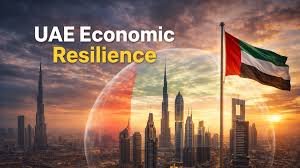
In the current geopolitical climate, with regional tensions making global headlines, it is natural for investors to ask: Is now the right time to start a business in the UAE?
While the world watches the news cycle, seasoned investors are watching the data. They understand a fundamental truth about the United Arab Emirates: This nation does not just survive economic shocks; it uses them as a catalyst for exponential growth.
For entrepreneurs considering company formation in the UAE, understanding this historical resilience is key to separating short-term noise from long-term opportunity. In this article, we explore how the UAE has navigated past economic crises—from the 2008 financial crash to the oil price slump and the COVID-19 pandemic—and how these experiences have built a fortress economy ready for the future.
The “Safe Haven” Mechanism:
The “Safe Haven” Mechanism: Why Capital Flows to the UAE During Uncertainty
Before diving into history, we must understand the current dynamic. When geopolitical tensions rise in neighboring regions, the UAE—particularly Dubai and Abu Dhabi—paradoxically often benefits as a “safe haven.”
- Flight to Quality: Regional wealth looks for a stable, secure jurisdiction.
- Asset Protection: The UAE’s legal and banking systems offer a level of asset protection unmatched in the region.
- Quality of Life: Expats and businesses seek the high standard of living and safety the UAE provides.
This creates a constant demand for business setup services, as professionals relocate and need to establish local entities.
Case Study 1:
The 2008 Financial Crisis – The Birth of a Federation
The 2008 global financial crisis was a major stress test. Dubai, which had boomed on real estate and credit, saw property prices plummet. The world doubted if the “Dubai dream” was over.
How UAE Emerged Stronger:
Abu Dhabi’s Support: In a defining moment of federal unity, Abu Dhabi provided $10 billion in support to Dubai. This wasn’t just a bailout; it was a message to the world that the UAE acted as one.
Regulatory Reform: The crisis led to the creation of a stronger regulatory framework. The Dubai Financial Services Authority (DFSA) and the Central Bank tightened controls, preventing the kind of unchecked lending that caused the crash.
Economic Diversification: The wake-up call accelerated Dubai’s plan to move away from a pure real estate play. It doubled down on logistics, tourism, and services.
The Result: By 2013, Dubai’s economy was booming again, and it had been rebranded as a safer, more regulated market. This era saw the rise of free zones like DMCC, which now hosts over 20,000 businesses.
Case Study 2:
The 2014-2016 Oil Price Slump – Diversification Proves Its Worth
When oil prices collapsed from over $100 a barrel to below $30, many Gulf nations struggled. As an oil producer, the UAE felt the pinch, but it did not break.
How UAE Emerged Stronger:
Non-Oil Sector Growth: By 2014, the UAE’s diversification strategy was already paying off. Non-oil sectors (tourism, trade, finance) contributed significantly to GDP, cushioning the blow.
Introduction of VAT: The government showed fiscal maturity by introducing VAT in 2018. While an expense for businesses, it signaled to international financial institutions that the UAE had sustainable, modern revenue streams, ensuring long-term fiscal health.
Infrastructure Spending: Instead of cutting back, Abu Dhabi and Dubai continued massive infrastructure projects, stimulating the economy and creating jobs.
Case Study 3:
The COVID-19 Pandemic – The Digital Leap
The pandemic was a global, non-financial shock that shut down borders. For a nation built on aviation and hospitality, the threat was existential.
How UAE Emerged Stronger:
Agile Governance: The UAE implemented one of the world’s fastest vaccine rollouts and created “safe corridors” for tourism when other nations remained locked down. By summer 2020, Dubai was open for business.
Remote Work Visas: The government introduced innovative visa programs like the Remote Work Visa, allowing foreigners to live in the UAE even if they worked for companies abroad. This fed directly into company formation as many of these remote workers eventually decided to set up local businesses.
100% Foreign Ownership: In a landmark move during the recovery phase, the UAE amended its Commercial Companies Law to allow 100% foreign ownership in most onshore businesses, removing the historic need for a local partner. This was a direct response to making the market more attractive in a post-COVID world.
The Current Scenario:
Geopolitical Tension and Business Opportunity
Today, as the region faces potential conflict, the UAE is employing the lessons learned from these three major crises.
Why Company Formation is Still a Smart Move Right Now:
- Political Neutrality and Diplomacy: The UAE has positioned itself as a diplomatic hub, maintaining ties with East and West. This neutrality ensures that Emirati businesses are rarely subject to secondary sanctions or trade embargoes, protecting your assets.
- The “UAE Pass” and Digital Economy: Post-COVID, the UAE has digitized government services. You can now complete much of the company formation process online, meaning geopolitical friction on the ground does not halt business setup.
- Inflation-Proof Currency: The Dirham is pegged to the US Dollar. This provides currency stability. When regional currencies fluctuate due to fear, the Dirham remains rock solid, protecting your capital.
- Golden Visas: To attract the best talent during global uncertainty, the UAE has expanded its Golden Visa program, offering 10-year residency to investors, entrepreneurs, and specialized talent. This creates a stable, long-term customer base for new businesses.
Conclusion: History Repeats Itself (In Growth)
The narrative of the UAE is not one of avoiding crises, but of mastering them. From the financial crunch of 2008 to the health crisis of 2020, the nation has consistently implemented reforms that make company formation more attractive, more accessible, and more secure.
For the entrepreneur looking at the current war scenario, the question shouldn’t be “Should I wait?” but rather “How can I position myself in the region’s most stable economy?”
The UAE has the blueprint for resilience. By setting up your business here, you are building on a foundation that has been fire-tested and proven stronger every single time.